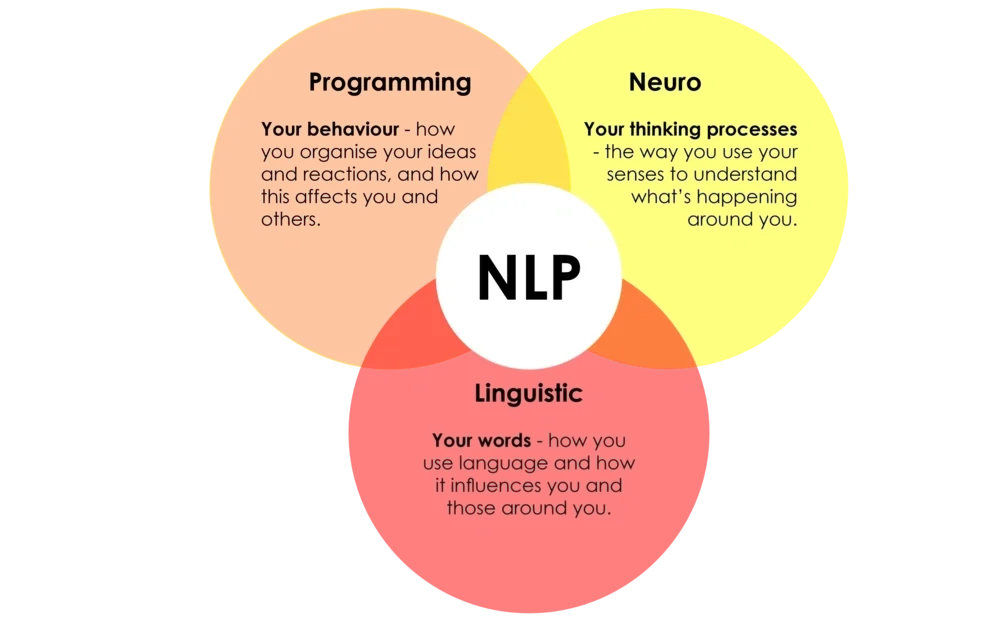
Neuro-Linguistic Programming (NLP) is a psychological approach that aims to understand and use the language of the mind to pursue specific goals and improve communication and personal development. It was developed in the 1970s by Richard Bandler and John Grinder, who studied successful therapists and communicators in an attempt to identify the strategies behind their work. Read more about the approach.
NLP uses ideas drawn from language, cognition, and communication. Practitioners may use visualization, anchoring, modeling, and reframing to help people examine habitual thoughts and responses. Claims that these techniques directly “reprogram neural pathways,” however, should be treated cautiously; the evidence supporting NLP's distinctive therapeutic claims remains limited.
Neuro
Neuro refers to the idea that human experience is processed through the nervous system. NLP emphasizes that the way we perceive and interpret the world is influenced by how the brain and body receive and organize sensory information.
Linguistic
Linguistic refers to the use of language to create and communicate meaning. NLP practitioners view language as a tool that can shape how people describe their experiences and, in turn, how they interpret and respond to them.
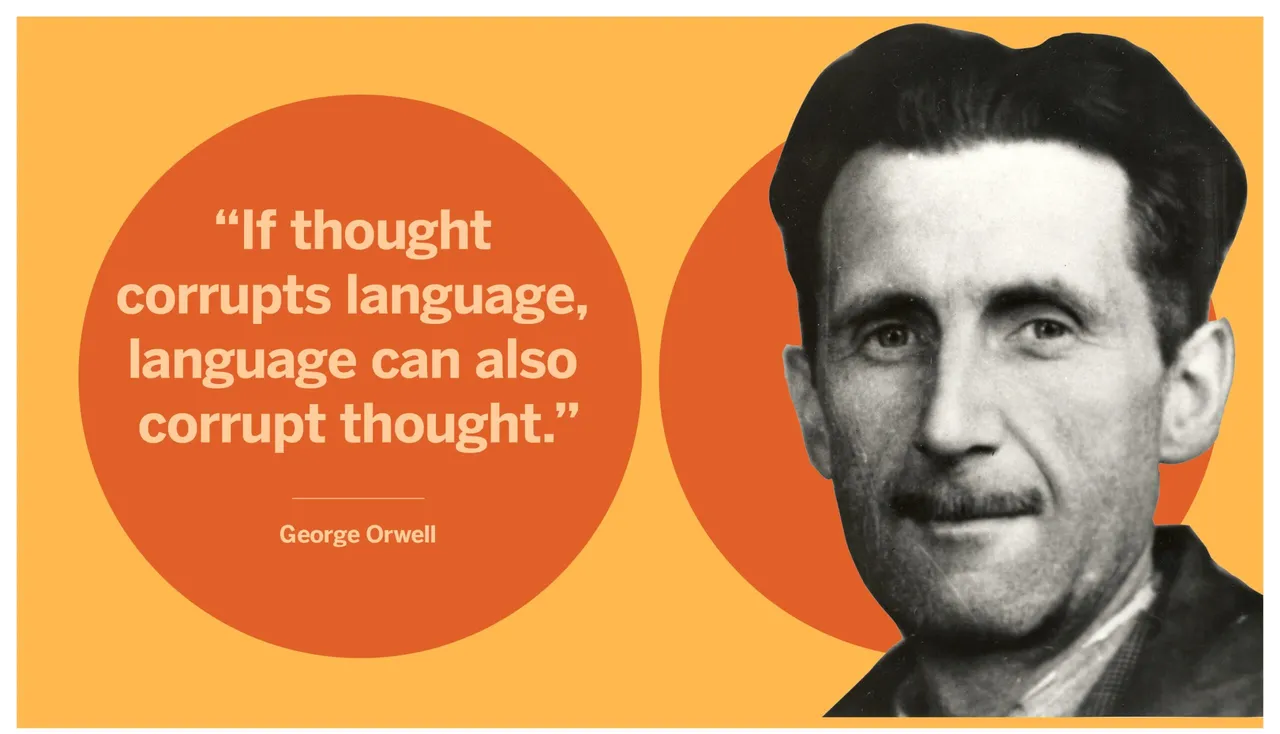
Language Can Corrupt Thought
- Doublespeak: Language can obscure or distort the truth. Vague wording, ambiguity, and euphemisms can make it difficult to think clearly about a situation.
- Loaded language: Emotionally charged words can influence perception and produce a desired response before an argument has been considered carefully.
NLP encourages people to become more aware of their own language and the language used by others. Greater awareness may reveal patterns of thinking or communication that are limiting or unhelpful.
For example, someone who repeatedly says, “I can't do this” or “I'm not good enough” may begin to treat those statements as settled facts. Replacing them with language that is more accurate and constructive—such as “I don't know how to do this yet”—can support a different emotional and behavioral response. That principle is not unique to NLP; it also resembles methods used in established cognitive and behavioral approaches.
Programming
The programming portion of NLP refers to the patterns through which people organize thoughts and behavior. Common NLP concepts include:
- Modeling: Observing and attempting to reproduce the strategies and behavior of someone who performs a skill successfully.
- Strategies: Examining recurring sequences of thought and behavior used to pursue a particular result.
- Beliefs: Identifying assumptions and attitudes that influence emotions, choices, and actions.
- Anchoring: Associating an emotional state with a particular cue, such as a word, gesture, image, or touch.
What Does the Evidence Say?
NLP remains controversial. A systematic review of health-related outcomes found little evidence that NLP interventions improve health outcomes, while also noting that the available research was limited in both quantity and quality. This means NLP should not be presented as a scientifically established treatment or a replacement for evidence-based mental-health care.
Some of its exercises—such as noticing self-talk, reframing an interpretation, visualizing a goal, or modeling an effective behavior—may still feel useful to individuals. Their usefulness does not prove the broader theory behind NLP, and many of those practices overlap with techniques found in better-supported approaches.
NLP is used in coaching, education, business, communication training, personal development, and some therapy settings. Anyone using it for significant psychological distress should understand its evidentiary limits and work with a properly qualified mental-health professional.